
Jackson County Arrest Records Explained
A Jackson County arrest record is the account of a single arrest. It captures who was detained, the arresting agency, the date and place, and the booking that follows at the county jail. Deputies under the Sheriff make many of these arrests, and city police, the Highway Patrol, and other agencies make others. The arrest itself does not decide guilt. After booking, the District Attorney or County Prosecutor reviews the facts and decides which formal charges to file with the proper court clerk. Once filed, those charges open a court case and become the charge record that the public can track.
The Jackson County Sheriff oversees the agency behind many local arrests, and the office publishes a sheriff biography and contact block for the public.  Sheriff John Ledbetter leads the deputies who handle booking at the Adult Detention Center, where an arrest record first takes shape before any charge reaches the court.
Two records describe the same event from different angles. The arrest record sits on the booking and sheriff side, and the jail roster shows custody status and recent bookings. For that custody detail, the county inmate records channel is the right starting point. The court charge record is different. It reflects the court charges after arrest, meaning what the prosecutor actually filed, how each count is worded, and how the charges change as the case proceeds. The complete case file, including pleas, hearings, and the final outcome, sits with the matter covered under criminal court records.
How to Find Jackson County Charges
Finding charges in Jackson County means matching the record to the court that holds it. There is no single statewide free search that returns every charge for every court. Felony charges and major cases run through the Circuit Court, and filed documents are viewed through Mississippi Electronic Courts after a public registration. Misdemeanor and preliminary charges may sit in County Court, Justice Court, or a municipal court. The arrest and booking side, by contrast, appears in the county jail roster rather than the court index, so a charge search and a booking search are two separate steps.
The Sheriff's Office keeps a law enforcement records page that links inmate and offender lookups for the public. 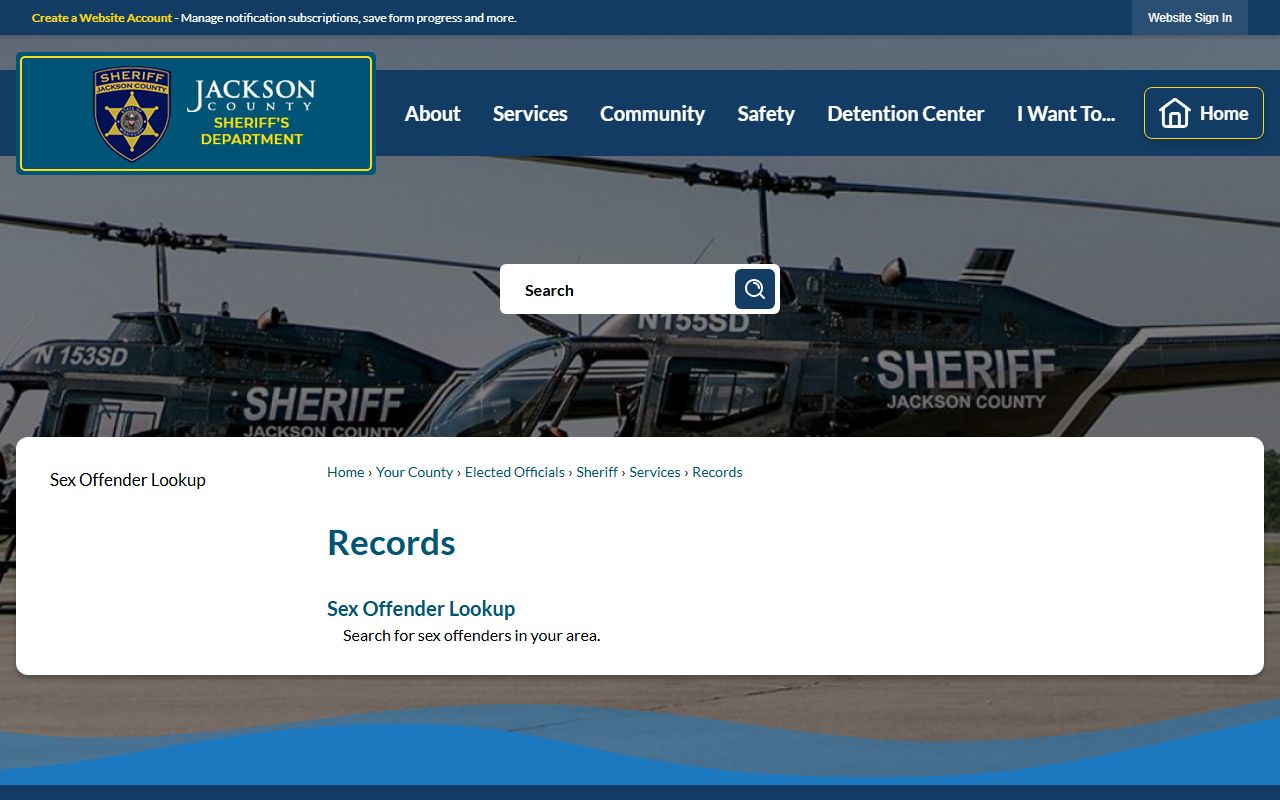 These sheriff records cover the arrest and custody side of a case, while the filed charges and their status are read from the court index instead.
- Open the court case search or Mississippi Electronic Courts portal for the right court.
- Search by the defendant's full name or, if known, the case number.
- Open the case and read the full list of filed charges.
- Check each charge's statute code, severity level, and current status.
Charges can also surface through other public channels. The county inmate lookup and the Sheriff's Office mobile app handle recent local bookings and active warrant details. For someone already sentenced and moved to state custody, the Mississippi Department of Corrections runs a statewide inmate search, described further below.
How Jackson County Charges Get Filed
A charge record begins the moment a prosecutor files a charging document, not at the arrest itself. After a Jackson County arrest and booking, the County Prosecutor or the District Attorney reviews the police report and the evidence. The County Prosecutor represents the State in Justice and County Courts and handles many misdemeanors and felony preliminaries. The 19th Judicial District Attorney carries felony prosecutions into Circuit Court. The document they file sets the case in motion, and three forms are common. The one used depends on how serious the offense is.
| Complaint | Information | Indictment | |
|---|---|---|---|
| Filed By | Officer / Prosecutor | Prosecutor | Grand Jury |
| Common For | Misdemeanors | Many felonies | Serious felonies |
| Starts | The case | The case | The case |
A grand jury sits in Circuit Court to weigh felony evidence and returns an indictment when it finds probable cause. Lesser cases often proceed by complaint or by information without a grand jury. Each path produces a charge that the clerk records and the court then tracks through every hearing.
Note: A charge listed at booking can differ from the charge a prosecutor finally files, so the court document controls what a person actually faces.
Charge Status in Jackson County
Charges rarely stay frozen from arrest to resolution. As a Jackson County case develops, the prosecutor may amend a count, reduce a felony to a misdemeanor, add a charge, or drop one entirely. Plea negotiations, new evidence, and witness problems all drive these changes. Reading the status next to each charge tells you where a case stands far better than the original booking charge does. The terms below appear often in Mississippi court records.
| Status | What It Means |
|---|---|
| Pending | The charge is filed and the case is active, with no final outcome yet. |
| Amended / Reduced | The prosecutor changed the charge, often to a lesser offense or to correct the wording. |
| Dismissed | The court dropped the charge, ending it without a conviction. |
| Nolle Prosequi | The prosecutor formally declined to pursue the charge any further. |
Charges vs. Convictions
A charge is an accusation, and a conviction is a result. This distinction matters when reading any Jackson County arrest record or charge record. A person can be arrested, charged, and later cleared without ever being convicted. A filed charge only requires probable cause, while a conviction requires proof beyond a reasonable doubt or a guilty plea. Both the charge and the conviction can appear in public records, so seeing a charge alone never proves that someone was found guilty.
| Charge | Conviction | |
|---|---|---|
| Stage | Accusation | Verdict or plea |
| Burden of Proof | Probable cause | Beyond reasonable doubt |
| Public Record | Yes | Yes |
Sealed vs. Expunged Records
Mississippi law lets some people clear an eligible record. Sealing and expunction are not the same thing. A sealed record is hidden from routine public view but may still exist for limited official use. An expunged record is treated, by law, as though it never happened. Under Miss. Code Ann. § 99-19-71, eligible dismissed charges, certain misdemeanors, and some first-time felony convictions may be expunged by petition filed in the court that handled the case. Eligibility turns on the offense, the prior record, and completion of any sentence.
| Sealed | Expunged | |
|---|---|---|
| Visibility | Hidden from public | Destroyed / treated as never existed |
| Law Enforcement | Limited access | Very limited |
| Eligibility | Set by statute and court order | Dismissed charges and certain offenses under § 99-19-71 |
Jackson County Charge Codes and Levels
Every charge points to a specific Mississippi statute, and that code defines the offense and its severity. Mississippi sorts crimes mainly into felonies and misdemeanors. Felonies are the more serious offenses and route to Circuit Court, while misdemeanors are handled in County, Justice, or municipal courts. A single Jackson County arrest can produce several separate charges, each with its own code and level. One traffic stop might generate a felony count plus two related misdemeanors, and each one is tracked and resolved on its own. The statute number on the charge is the key to understanding exactly what was alleged.
Statewide Charge and History Lookups
Local charges feed into statewide systems once a case reaches sentencing. The Mississippi Department of Corrections keeps custody of people sentenced to state time, and its public search confirms where a charge ended for those defendants. This statewide layer matters because a Jackson County felony that ends in a prison sentence will show in state corrections data, not just the county index.
The Department of Corrections hosts an inmate search by name or MDOC ID for sentenced offenders across the state. 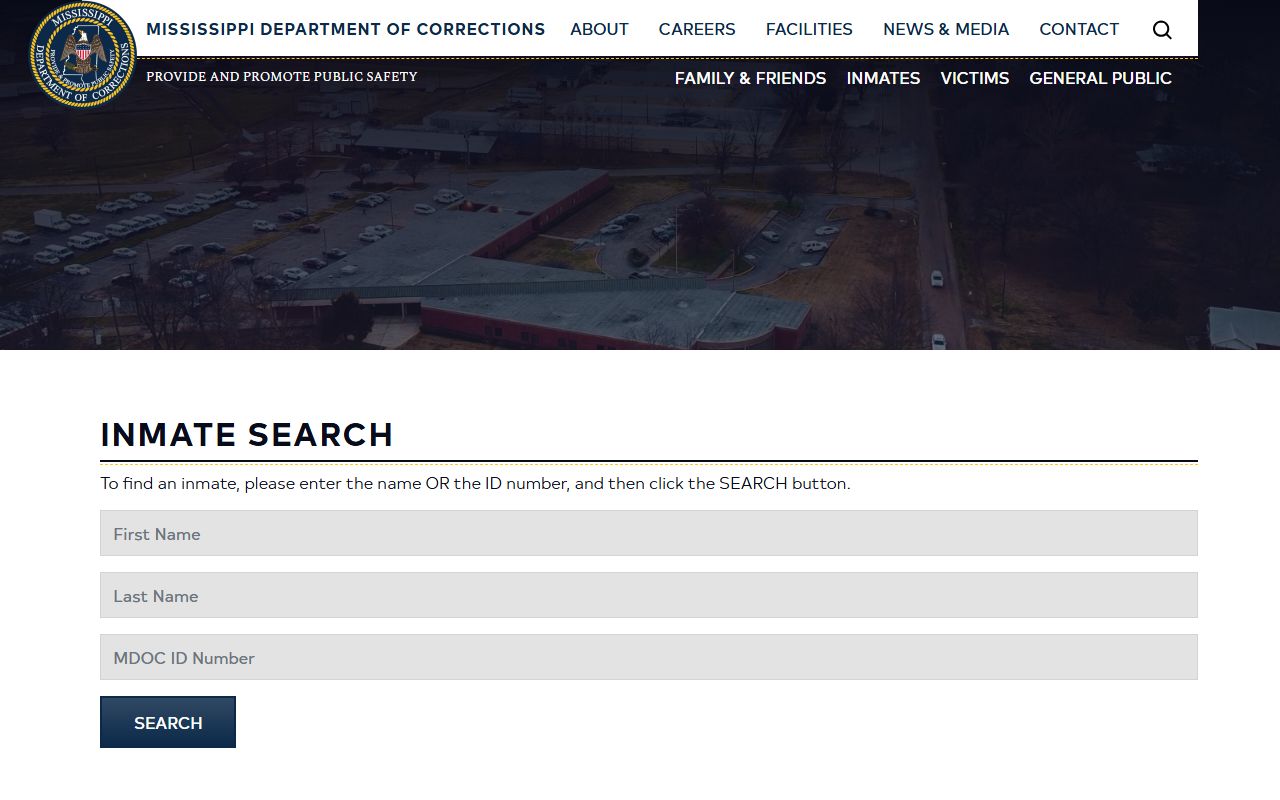 The tool returns state custody status rather than the charging documents, so it complements the county charge record instead of replacing it.
A second, mirror version of the same search runs on the state's main service portal. The MDOC inmate search on ms.gov accepts a name or an ID number. 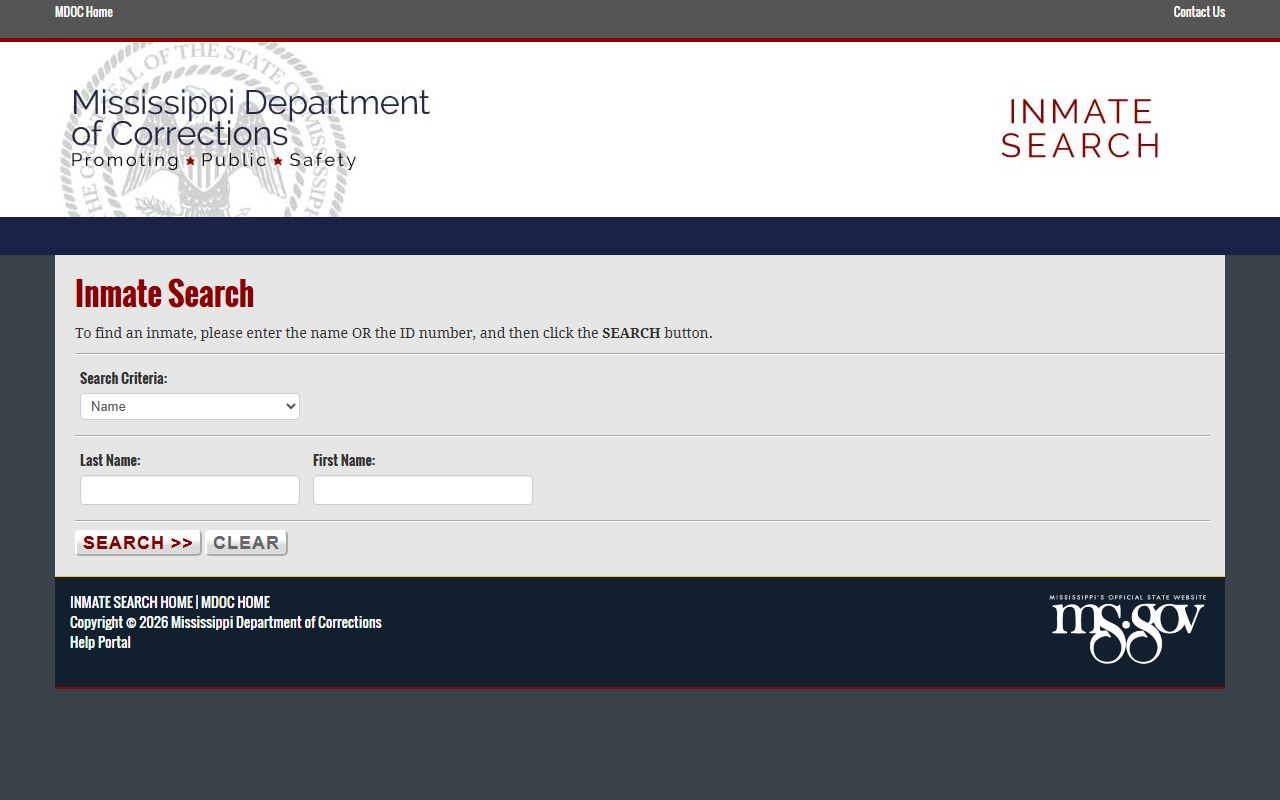 Either version is free to use and points to state custody, parole, or release status tied to a prior charge.
When a record is not online, a direct request reaches the agency that holds it. The corrections agency lists its records department on an MDOC contact page with a mailing address, phone, and email. 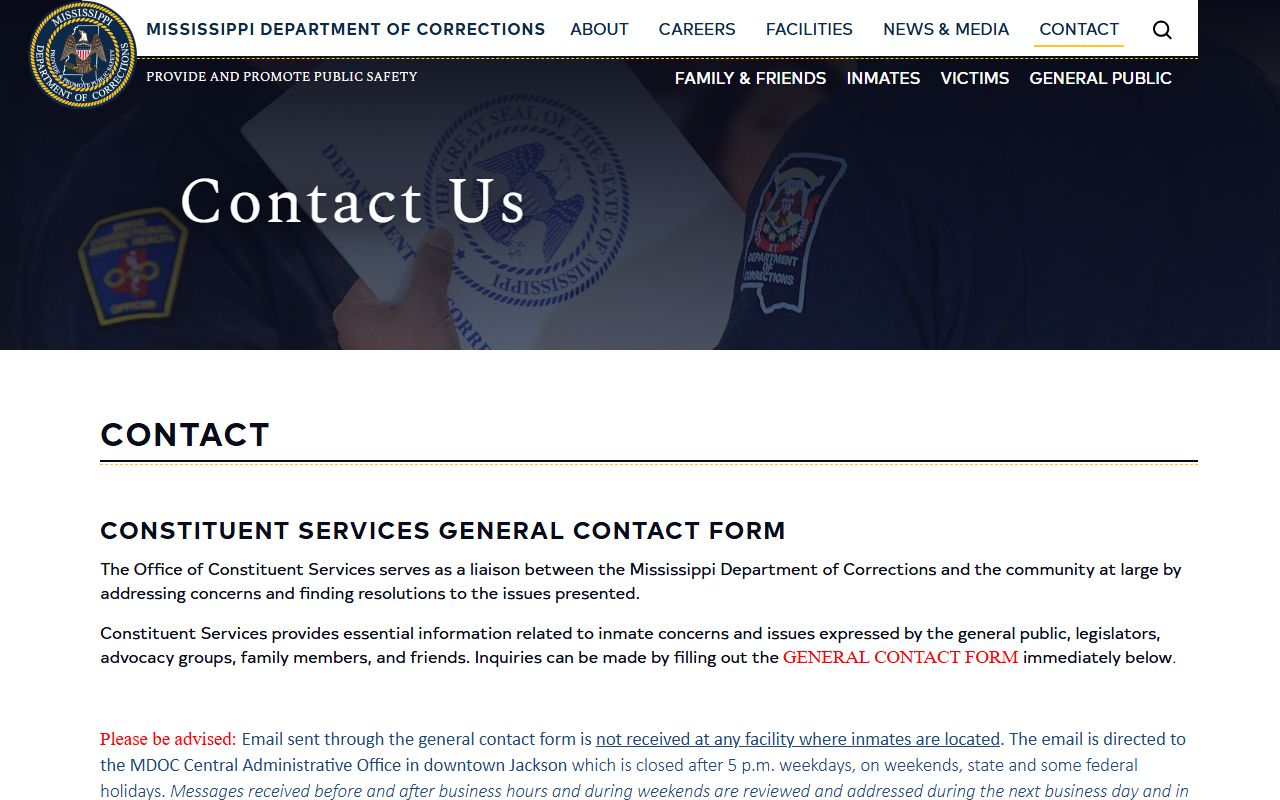 For county charge files, the request instead goes to the court clerk under the Mississippi Public Records Act, which keeps most court records open unless a statute seals them.
Jackson County Background Checks
People search Jackson County arrest records and charges for many reasons, from personal safety to simple curiosity. The legal weight of that search depends on its purpose. A casual lookup of public charge records is one thing. Using records to decide employment, housing, credit, or insurance is regulated by the federal Fair Credit Reporting Act, which requires a licensed consumer reporting agency and gives the subject rights to notice and dispute. Court portals and county lookups are not background-check services, and a raw charge record may be incomplete or out of date.
Important: This site is not a consumer reporting agency under the FCRA and does not provide records for employment, tenant, credit, or insurance screening.
Restricted Jackson County Charge Records
Some Jackson County charge records stay out of public view. Youth Court matters involving juveniles are confidential under Mississippi law and do not appear in ordinary case searches. Charges that have been sealed or expunged are removed from public portals by court order. Records tied to an active investigation may be withheld until the case is filed or closed. Adoption, mental-commitment, and certain protected personal details are also restricted. When a search returns nothing, the charge may never have been filed, or it may sit in one of these protected categories rather than in the open record.